Green Interior Design Trends for Eco-Conscious Homeowners
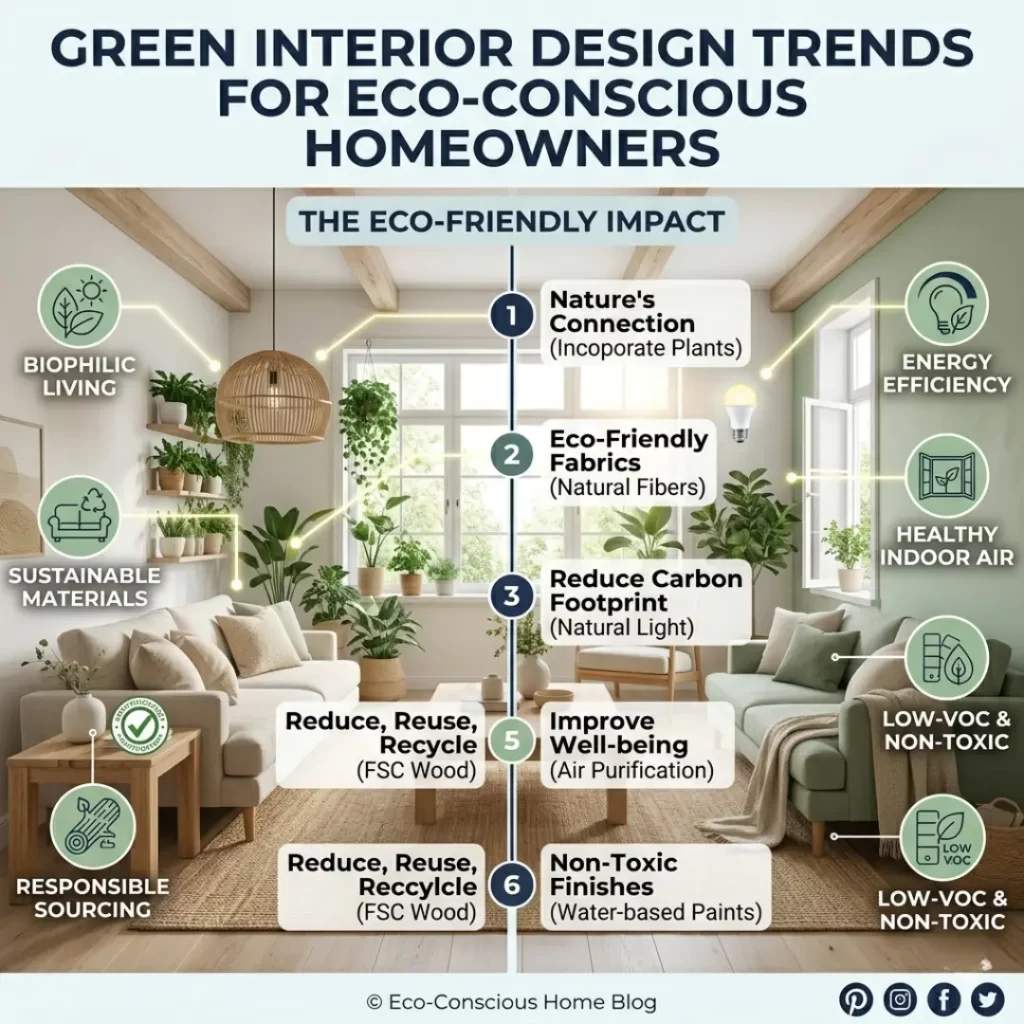
Let’s be completely honest for a minute. We have all been there—you walk into a stunning, perfectly styled room, and it takes your breath away. But then, a little voice in the back of your head whispers, “What is this doing to the planet?” For a long time, the design industry operated on a “take, make, and dispose” model. We ripped out perfectly good floors, tossed out old furniture, and bought cheap, trendy pieces that fell apart in two years. Thankfully, a massive shift is happening, and green interior design trends are taking over the conversation. Homeowners are waking up to the fact that a beautiful home shouldn’t cost the earth—literally. We are moving away from fast furniture and toxic paints, embracing a much more mindful way of living. People finally realize that sustainability and style go hand in hand. So, what does it actually mean to design an eco-conscious home today? It means looking far beyond just adding a few potted plants to your living room. It involves rethinking the materials we use, the energy we consume, and the lifespans of the items we bring through our front doors. If you are ready to create a space that looks incredible, feels deeply nurturing, and treads lightly on the environment, you are in the right place. Let’s dive into the most impactful green interior design trends reshaping the way we live, and explore how you can bring them into your own sanctuary. The Heart of the Shift: Why Green Living Spaces Matter Before we jump into specific aesthetics and materials, we need to talk about the “why.” Why are so many homeowners pivoting to green living spaces right now? The answer is twofold: personal health and planetary health. Health and Environmental Impacts of Green Living Spaces First, let’s talk about personal well-being. Traditional homes are often filled with invisible toxins. Conventional paints release volatile organic compounds (VOCs) into the air for years after application. Synthetic carpets off-gas harmful chemicals. Mass-produced furniture is frequently glued together with toxic adhesives. Living in this kind of environment takes a silent but steady toll on our respiratory systems, our sleep quality, and our overall health. By choosing eco conscious home decor, you actively remove these invisible threats from your sanctuary. You breathe easier, literally. Secondly, planetary health is at a critical juncture. The construction and design industries generate an astronomical amount of waste. By demanding sustainable options, homeowners force the industry to change its ways. When you choose to repurpose, recycle, or invest in responsibly sourced goods, you vote with your wallet. Ultimately, creating green living spaces is about recognizing that our homes are deeply connected to the wider world. What we put inside our four walls directly impacts the forests, the rivers, and the atmosphere outside them. Trend 1: Embracing Natural Interior Design and Biophilic Elements One of the most prominent green interior design trends right now is the deep, intentional embrace of biophilia. Biophilia is the innate human desire to connect with nature. For decades, we designed homes that shut the outside world out, relying heavily on artificial lighting and climate control. Now, we are swinging the doors wide open. Natural interior design is all about blurring the boundary between the indoors and the outdoors. Maximizing natural light so you do not have to flip a switch at 2:00 PM is a core principle. Furthermore, it involves using organic shapes and textures that mimic the natural world. Think undulating wood grains, rough-hewn stone accents, and flowing water features. Studies consistently show that incorporating natural elements reduces stress, lowers blood pressure, and boosts creativity. By integrating natural interior design principles, you create a space that actively heals you. This focus on a genuine, tactile connection to the earth is what makes biophilic design a cornerstone of the modern eco-friendly movement. Trend 2: Investing in Sustainable Furniture Solutions Fast furniture is the equivalent of fast fashion. It is cheap, it is trendy, and it is designed to break. When that cheap particle-board bookshelf wobbles itself to pieces, where does it go? Straight to the landfill, where it sits for centuries. This disposable mindset is the exact opposite of sustainability. The True Cost of Fast Furniture vs. Sustainable Furniture Consequently, shifting toward sustainable furniture is one of the most vital green interior design trends today. This means investing in pieces built by skilled artisans who care about longevity. Buying solid wood tables ensures you can pass them down to your grandchildren. Choosing a sofa with a sturdy, kiln-dried hardwood frame rather than one made of glued-together sawdust guarantees years of comfortable use. Moreover, sustainable furniture solutions involve looking at the entire lifecycle of a product. Where did the wood come from? Was it harvested from a responsibly managed forest? Are the fabrics free from harmful chemical treatments? By asking these questions, you ensure your furniture doesn’t harm the environment during production, and it won’t harm your indoor air quality once it sits in your home. Quality always outlasts quantity. Buying less, but buying better, remains the ultimate sustainable choice. Trend 3: Choosing Eco Friendly Materials for Sustainable Decorating Ideas Materials matter immensely. The physical stuff that makes up your home—from the insulation behind your walls to the fabric on your chairs—determines how eco-friendly your space truly is. Therefore, scrutinizing materials is a massive part of the current green interior design trends. Flooring and Textile Eco Friendly Materials Let’s look at flooring, for example. Traditional wall-to-wall carpeting is a nightmare for the environment. Made from petroleum-based synthetic fibers, it also off-gasses chemicals into your home. Instead, homeowners are opting for hard surface floors made from eco friendly materials. Reclaimed wood is incredibly popular because it gives old barns and factories a second life. Cork is another fantastic option; harvesting it does not kill the tree, and the bark naturally regenerates. Linoleum—not to be confused with vinyl—is crafted from linseed oil, pine rosin, and wood flour, making it completely biodegradable. When it comes to sustainable decorating