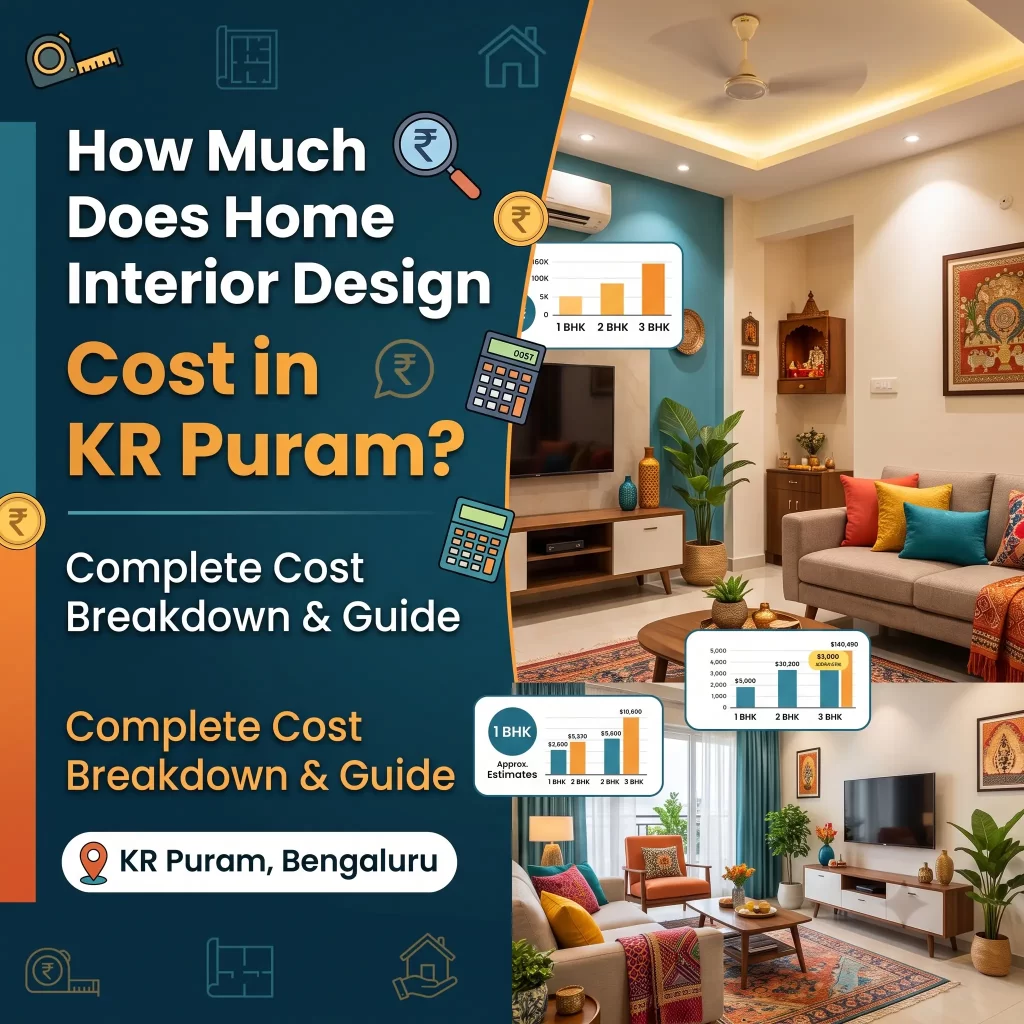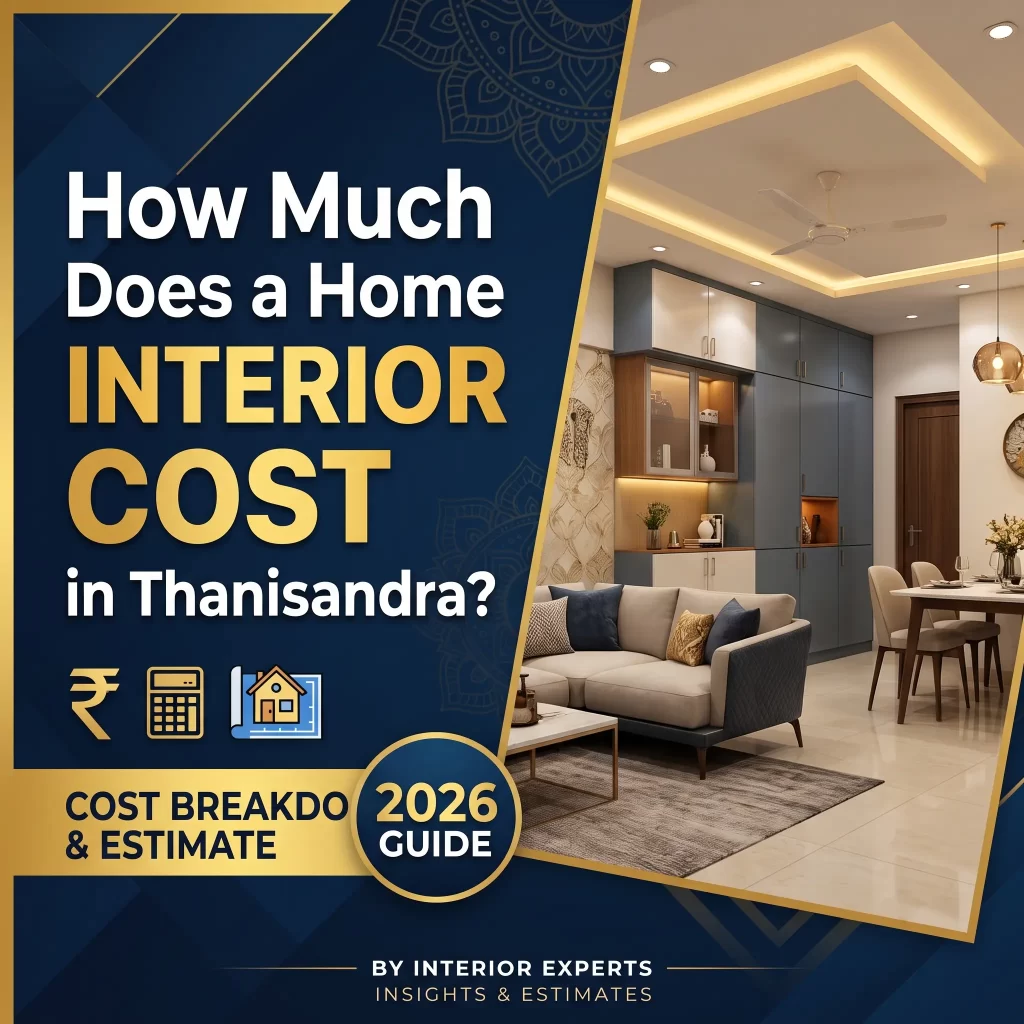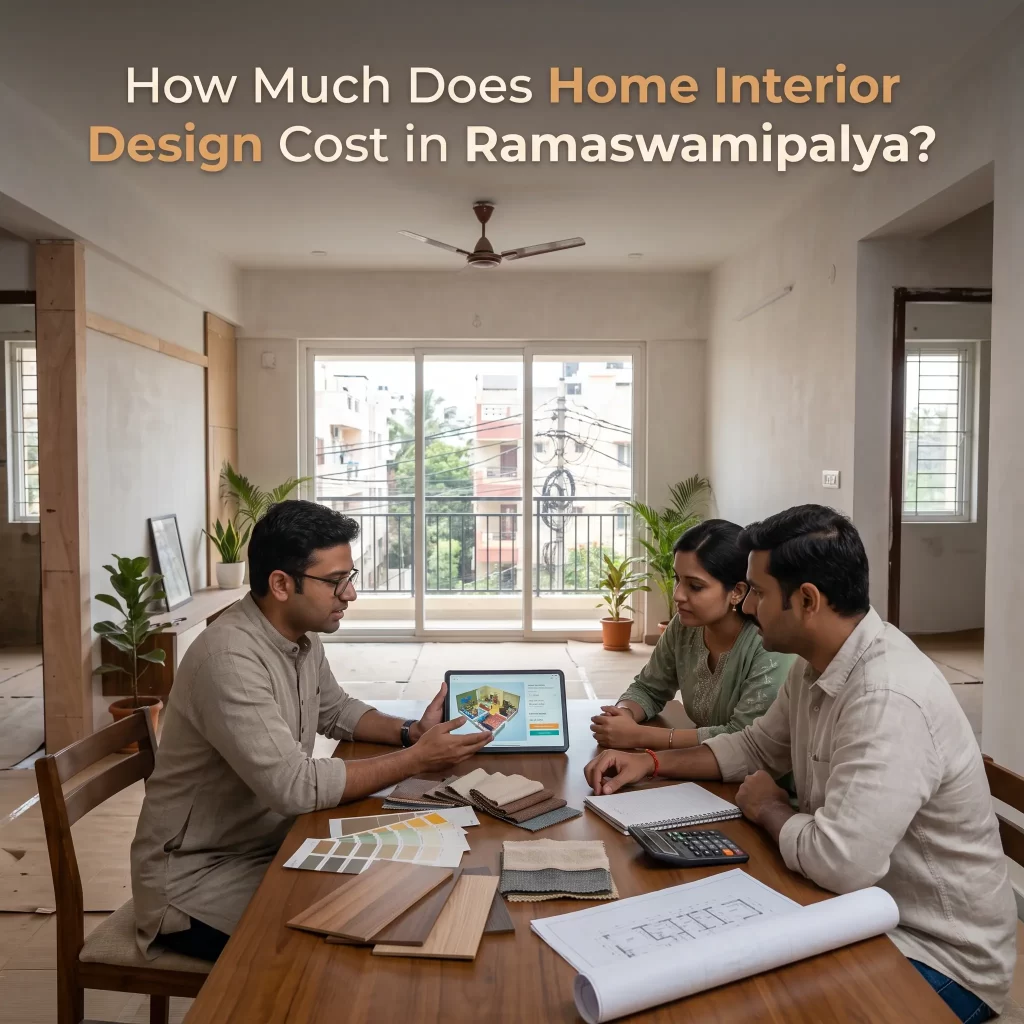
How Much Does Home Interior Design Cost in Ramaswamipalya?
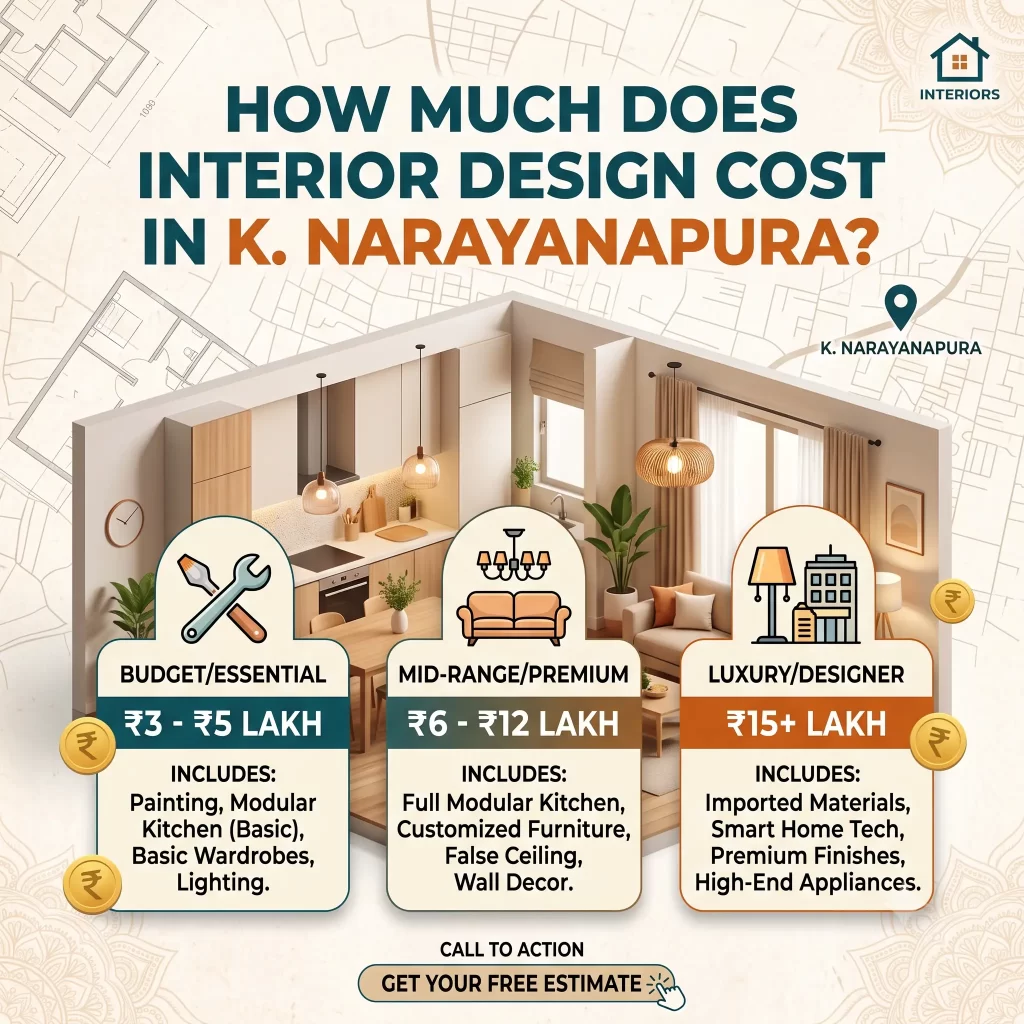
Last month, a young couple walked into our studio in Kalyan Nagar. They had just booked a 2BHK in Ramaswamipalya, possession was two months away, and they’d come straight from the site — still arguing about whether the dining table should seat four or six. The pleasantries lasted about ten seconds. Then the husband leaned forward and asked the question we hear almost every day: “So tell us honestly. What’s all this going to cost?” Honestly is the right word. Because the Interior Design Cost in Ramaswamipalya is not one number. It never is. We’ve designed two identical flats on the same floor of the same building, and one came in at a little over 4 lakhs while the other crossed 9. Both families were thrilled with their homes. The difference wasn’t luck. It was what they wanted, what they chose, and how the money was spent. So no vague “it depends” lectures today. Let me sit you down, pour the coffee, and give you real numbers, real examples, and a few things designers usually don’t say out loud. First, Why Prices Vary So Much From Home to Home Before we talk rupees, you need to understand what moves the needle. Two things, mostly. The first is scope. A full-home project — kitchen, wardrobes, false ceiling, lighting, living room, painting — naturally costs far more than a kitchen-and-two-wardrobes job. The second is material. Laminate finishes are friendly on the pocket. Acrylic and PU finishes sit comfortably in the middle. Veneer and imported materials? Beautiful, but they’ll stretch any budget. Then there’s the smaller stuff people forget: how old the home is, whether the builder left the walls plastered or not, how much customisation you want versus ready modular units. All of it adds up. Which is exactly why you should be a little suspicious of anyone who quotes you a price over the phone without seeing your home. 1. Interior Design Cost in Ramaswamipalya – What People Actually Spend Alright, numbers. So what does the Interior Design Cost in Ramaswamipalya actually look like for a full home? Based on the projects we’ve handled in and around the area over the last few years, here’s the honest picture. A 1BHK, done properly but sensibly, lands between 2.5 and 4.5 lakhs. Most 2BHKs we finish fall somewhere in the 3.5 to 8 lakh range. A 3BHK usually sits between 5 and 12 lakhs, and villas or 4BHKs can go anywhere from 9 lakhs upward — sometimes well past 20 if the owner wants premium everything. What do these figures include? The essentials: a modular kitchen, wardrobes for each bedroom, basic false ceiling in the living and dining areas, lighting, a TV unit, and painting. What they don’t include is loose furniture like sofas and beds (unless you ask for it), appliances, and the fancy extras — automation, wall cladding, imported fittings. Here’s the line we tell every client at Yello-W-All Decor: fix your budget first, then let the design follow it. A good designer can make 4 lakhs look like 8. A careless one can make 8 look like 4. The layout rarely decides the bill. The finishes do. Interior Design Cost in Ramaswamipalya per Square Foot Some people find per-square-foot numbers easier to digest, and fair enough — it’s how most studios, including ours, prepare first-round estimates. Roughly speaking, the interior design cost in Ramaswamipalya per square foot works out to about ₹800–₹1,200 for a basic package with laminates and standard hardware. Mid-range work with acrylic finishes, better hardware, and designer ceilings runs ₹1,300–₹2,000. Premium jobs — custom carpentry, imported materials, automation-ready wiring — start around ₹2,200 and can cross ₹3,500. But here’s the catch nobody mentions: you don’t design every square foot of your home. Your passage, your balcony, the awkward corner near the bathroom door — nobody puts a wardrobe there. So when a studio multiplies your entire carpet area by a rate, push back a little. Ask them what exactly is being done, and where. In practice, most of the 2BHKs we do in Ramaswamipalya close between 4 and 7 lakhs, not the higher figure that raw multiplication suggests. The Interior Design Cost Breakdown Nobody Shows You Every homeowner deserves to see where their money actually goes. So here’s the interior design cost breakdown from a typical full-home project of ours. The kitchen eats the biggest share — usually 30 to 35 percent of the total budget. Wardrobes and storage take another 20 to 25. False ceiling and lighting together account for around 10 to 15 percent, living and dining units another 10 or so, painting and wall finishes about 8 to 10, and the designer’s professional fee makes up the last 8 to 10 percent. Why does this matter to you? Because once you see the split, you can make intelligent decisions. Maybe you decide the kitchen deserves the splurge but the dining unit can wait a year. Maybe you trim the false ceiling to afford better wardrobes. There’s no universally correct answer. There’s only your answer. We once met a family in Banaswadi who had spent close to 3 lakhs on a gorgeous kitchen and then had almost nothing left for bedroom wardrobes. They lived out of suitcases for a year. Please don’t do that. Spread the money where it’s needed, not just where it’s photogenic. Modular Kitchen and Wardrobe Pricing – The Two Big Tickets Since the kitchen and wardrobes together swallow over half your budget, let’s spend a minute on modular kitchen and wardrobe pricing. A straight or L-shaped modular kitchen in laminate finish typically costs between ₹1.3 and ₹2 lakhs. Move to acrylic or PU finishes and you’re looking at ₹2 to ₹4 lakhs or more, depending on size and accessories. Wardrobes run about ₹1,100 to ₹1,600 per square foot in laminate, and ₹1,700 to ₹2,400 in acrylic or PU. Lofts and overhead units — the boxes above your wardrobes — add ₹350 to ₹600 per square foot. My honest advice, after